
The Problem
A friend with chemical sensitivity can’t attend church without getting sick from fragrances, so she stays online.
A mother with asthma hasn’t been able to sit through worship in 15 years because of scented products.
A teenager avoids youth group because fragrances trigger severe migraines.
A son stays home on Easter because of severe allergic reactions to lilies.
Research shows:
Up to 12% of the population has diagnosed chemical sensitivity (environmental illness).
Another 12% self-report sensitivity.
Fragrances include perfumes, colognes, aftershave, lotions, hair products, detergents, and fabric softeners. Many contain synthetic petrochemicals that are toxic, may disrupt hormones, or act as carcinogens.
Short-term exposure effects: runny nose, dizziness, headaches, breathing difficulty, asthma attacks, migraines, heart palpitations.
The challenge: People with sensitivities have an invisible disability. Too often, their concerns are dismissed, or others are offended when asked to avoid fragrances. Many have simply left our congregations without ever being counted.
Environmental Sensitivities and Fragrance Reduction Worship
Potential Solutions
2. Fragrance reduction policies.
Example: The Northern Alabama Conference developed a covenant policy, grounded in 1 Corinthians 12, recognizing that “in order to be whole, we need all parts of the body present.”
The US Access Board also offers a fragrance-free workplace policy.
1. Start with listening and believing. Take concerns seriously and support individuals.
3. Alternative worship spaces.
A fragrance-free afternoon service in a stone chapel with natural materials.
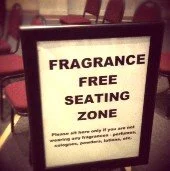
Glassed-in “cry rooms” stripped of carpeting, using stone or tile, with ventilation and posted signage: “Fragrance-Free Zone: Please use only unscented products.”
4. Congregational examples.
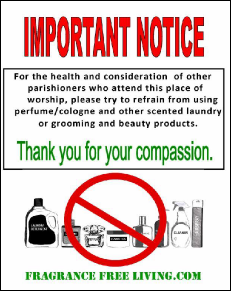
Moose Lake UMC (Minnesota) has practiced fragrance-free worship for 20 years. They post fragrance-free commitments on their website, avoid fresh flowers, and actively educate members.
Some churches include bulletin notices: “Fragrances: Many persons have allergies. Please refrain from wearing fragrance while at church. The first 3 pews on the pulpit side are reserved fragrance-free.”
5. Fragrance-free sanctuary sections. Create well-ventilated, clearly marked seating areas for those with mild sensitivities.
6. Broader chemical considerations. Policies must address:
Cleaning products
Candles and air fresheners
Photocopier chemicals
Lawn and garden pesticides/weed killers
7. Whole-church approach. Trustees, custodians, teachers, and staff all need to adopt and implement fragrance-free practices.
8. Impact: Churches that adopt fragrance-free practices report that people with allergies, asthma, and sensitivities are deeply grateful and often become highly committed members.
Additional Resources
Fragrance-Free Toolkit – UCLA (2019)
Dear Elders Letter – CRC Network (2023)
Fragrance – Campaign for Safe Cosmetics
How to Be Fragrance Free – Peggy Munson
National Prevalence and Effects of Multiple Chemical Sensitivities (2018)
Articles by Charlotte Hawkins Shepard, Ph.D. and Deaconess Lynn Swedberg, updated 09/11/24.